'Who has influenced you most?'
Mal recounts how Clare is his art and cultural tour guide especially when in Italy. On one particular occasion they visited an exhibition in Venice displaying works by Titian and other Renaissance and Baroque painters, Caravaggio and Rembrandt.
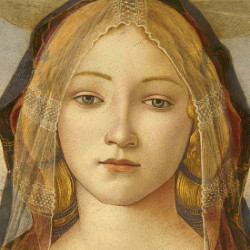 testBy Sandro Botticelli

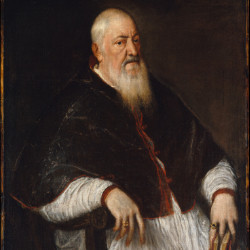
'What impressed me was the way Titian in the 1500's started to use light and shadow giving subjects another dimension, a sense of relief, when compared with other painters' rather flat looking subjects, albeit beautiful in their own right (Sandro Botticelli painted this portrait of a woman, about 1495). Contrast this with Titian's masterpiece.
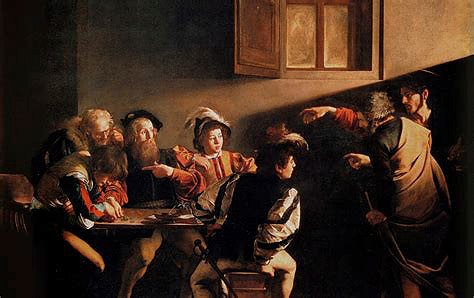
After Titian, the element of Caravaggio's work that is interesting is his experimentation sometimes almost theatrically, using shafts of light to make subjects pop out of the image (ref: Calling of Saint Matthew c. 1600).
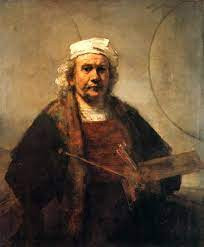
And then later in the 1600's Rembrandt modified the concept giving his work a more realistic softer feel whilst still drawing the viewers' focus to certain subjects in his paintings through clever use of light. Note in his self-portrait of 1659, he has moved away from the very dark stark backgrounds in favour of using the background to gently enhance the subject - he uses texture and lighting albeit with an effective darker border or vignette effect.
Ref: Rembrandt self-portrait completed in 1659
The first half of c20 marked a dramatic development in photography from the early simple reproduction of stoic-looking family portraits to an artform in its own right.
Just as we highlight the shift in the c16 painting world towards more life-like renditions, similarly, many of the early monochrome photographs in the early 1900's echo the comparatively flat and bland look (below). Contrast the more striking image with greater tonal contrast including deep shadows, by Paul Strand taken in 1915 of a New York scene - an innovative and standout image for this era.
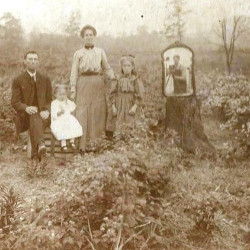
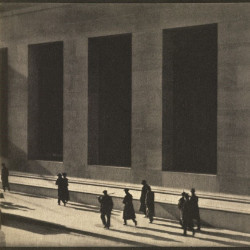
And whist painting skill, technique and style were developing dramatically in the late 1500's and 1600's not least with Caravaggio and Rembrandt, from 1900-1950, so too was photographic technology along with the skill of photographers and the emergence of different photographic styles:
'The Photo Secession' to 'The New Objectivity' to the 'Straight' and highly detailed presentation of natural and manufactured forms ref Edward Weston in the mid-1900s. Weston was an early mentor of Ansel Adams and Imogen Cunningham.
This image (below) by Bert Hardy 1942, of a busy train station scene, stands out from much of the contemporary photography of the time.
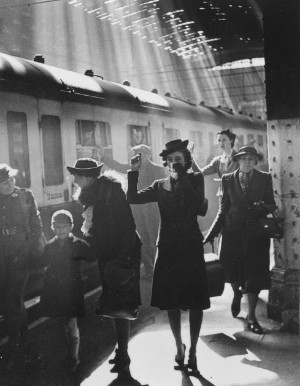
Here, we see more punchy tones from pure black to pure white, back-lit subjects, long dark shadows and atmospheric light beaming from overhead.
Far from a flat reproduction of a static scene, this image seems more real; there is movement, mood and one can imagine, probably a good bit of noise all around as people busily get on and off the waiting train, ready to move on.
The scene draws us in - it is almost real.