People & The World We Live In
Statistics taken from: the World Wildlife Fund (WWF), International Union for Conservation of Nature (IUCN), African Wildlife Foundation (AWF), the United Nations, National Geographic, The Smithsonian Museum. 2024
This is an extraordinary world. There are wonderful people, beauty in countless forms all around us, and moments of profound grace. But there is also considerable human conflict and suffering, unrelenting environmental degradation, and a world undergoing rapid and unsettling change.
Whatever our perspective on these matters, one thing is certain: at the centre of it all is human activity.
These photographic studies ask more of the viewer than simple aesthetic appreciation. Beyond the images and commentary lie some fundamental questions:
So what? Does any of this really matter? And if so, what realistically, is to be done?
Is conflict an inevitable part of the human condition? Are we humans hard-wired for conflict; not only to challenge and disagree, but to allow those differences to widen into division — and, at times, into war?
Connections and Consequences
Each study highlights not only its subject but also reveals human activity at play—our influence on people, landscapes, and entire ecosystems, both positive and destructive.
If we seriously consider 'what is to be done?', it is surely not enough to consider any one element in isolation. While we may never eliminate conflict entirely, we can reduce the pressures that so often give rise to it including: poverty, food insecurity, poor health, poor human-rights safeguards and environmental collapse.
If we believe the protection of ecosystems truly matters, for example, then supporting local communities to cultivate food sustainably and maintain biodiversity must sit at the heart of the conservation narrative. This is a necessary bottom-up approach—one that recognises that environmental health and human wellbeing are inseparable, and that lasting solutions begin where people live and work.
Consider the multi-award-winning documentary Kiss The Ground, which demonstrates regenerative agriculture's transformative potential.


The narrative must also embrace a top-down approach: lobbying government agencies and international organizations to implement sustainable solutions while supporting efforts that reduce human conflict and promote stability.
As the world experiences increasingly extreme climatic events, the connections between these elements become undeniable (see below: 'Our Vanishing Wildlife', and 'Why Worry About Extinctions?').
The Scale of the Challenge
We might be forgiven for responding with scepticism: "So you're saying we just need to convince individuals, institutions, and governments to set aside self-interest, dismantle bad actors, create stable economies, eliminate hunger and poverty, and commit meaningfully to sustainable food and energy sources?"
Daunting as this appears, there are however, actions each of us can take immediately on a personal level. It begins with taking personal responsibility for the smaller elements that contribute to the broader crisis. See: What Can We Do As Individuals?
Rethinking Food Systems
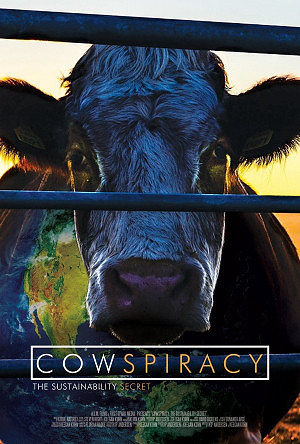
Addressing sustainable solutions requires confronting the unsustainable global meat industry—by far the largest contributor to damaging changes in our climate. This impact stems from livestock methane emissions as well as the massive deforestation required to grow feed crops. The documentary Cowspiracy provides compelling evidence of this crisis.
Plant-based meat alternatives now represent a significant growth industry, supplying major supermarkets in developed nations. These products offer health benefits and environmental impact reduction for those who struggle to eliminate animal products from their diets despite recognizing the need for change.
Regenerative Agriculture
Can we farm differently to prevent human-induced desertification? Pioneering farmers worldwide are already demonstrating how, achieving higher productivity while maintaining healthy soil and preserving natural biodiversity.
This involves transforming entrenched ploughing and fertilizing methods that have become standard practice despite their destructive outcomes. Kiss The Ground documents these innovative approaches with clarity and hope.

Our Vanishing Wildlife
Our world harbors some wonderful wildlife. There used to be far more.
Consider these figures:
- African Elephant: population declined by 62% between 2002-2011
- Black Rhino: Between 1960 and 1995, black rhino numbers dropped by 98%
- Giraffe: has lost 40 percent of its population in just 30 years
- Hippo: since 2000 95% of the hippo population has been lost in the DRC that had the world's largest hippo population
- Bornean Orangutan population: declined by more than 50% over the past 60 years
National Geographic reports that "recent estimates suggest extinction threatens up to a million species of plants and animals."
Wildlife populations have declined by more than two-thirds in less than 50 years (WWF Chief Executive Tanya Steele, 2020).
The Sceptics' Valid Place
Qualified challenge to such statistics should always be welcome. Sceptics hold an important place in this conversation.
Extinction is undeniably part of life's grand scheme—an inevitable cyclical occurrence since life began on Earth. Approximately 99% of all species that ever existed are now extinct.
Why Worry About Extinctions Now?
This Time There Is One Critical Difference - the rate of extinction has never been so catastrophically high. A startling imbalance has emerged.
The Holocene extinction—otherwise known as the sixth mass extinction or Anthropocene—is now recognized by most scientists as well underway. The current rate of species extinction is estimated at 100 to 1,000 times higher than sustainable 'natural background' baseline rates, and 10 to 100 times higher than any previous mass extinction in Earth's history.
In a nutshell, our damning report reads:
'In a relatively negligible span of time, we have devastated entire ecosystems, hunted countless species to extinction, introduced invasive species, and fundamentally altered the chemical composition of our atmosphere and oceans.'
Under normal conditions, speciation (the birth of new species) exceeds extinction rates, with approximately one in ten species disappearing each year (Science journalist Pietro Greco, 2020). Balance and sustainability once existed.
These figures have exploded exponentially over the last century, in entirely the wrong direction. This is totally unprecedented.
No Guarantees
There is no guarantee that things will simply "work out" within evolution's grand cycle. This time, the indicators are frightening, the connections are clear and the consequences, devastating.
A coherent approach is required at every level, from individuals to governments.
What Can We Do?
1. We can try to 'take the middle ground' in our conflict resolution effort. We can try to do this at a personal conflict level, right up to a geopolitical conflict level - it will not always workout but it will most probably help.
2. What We Can Do As Individuals In Our Daily Routine?
Some organizations making a difference:
- African Wildlife Foundation (AWF)
- International Union for Conservation of Nature (IUCN)
- World Wildlife Fund (WWF)
We thank them and particularly their people working at the frontlines of this conservation battle. They inspire us to do better and to do more.
For documentary recommendations mentioned above:
- Kiss The Ground - Regenerative agriculture
- Cowspiracy - Environmental impact of animal agriculture
- The Game Changers - Plant-based nutrition and performance